
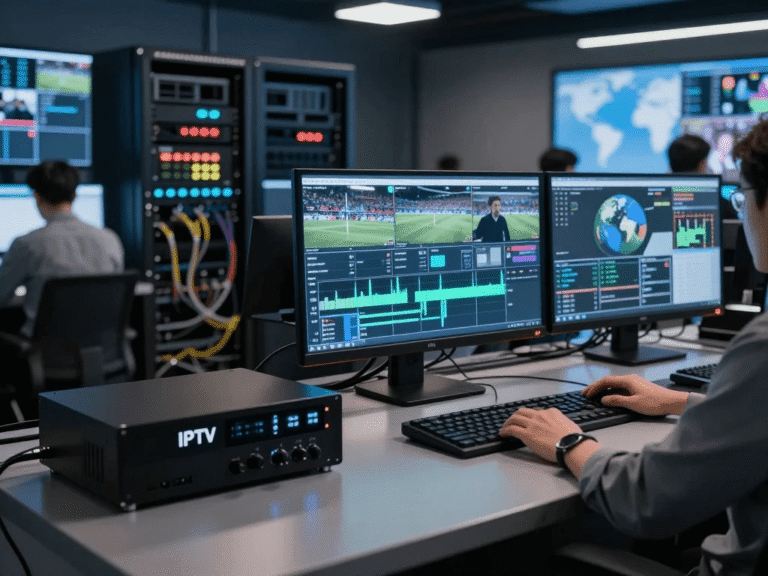
In the modern broadcasting world, your audience expects flawless streaming quality every single time they tune in. Whether you operate a television channel, manage sports events, run religious broadcasts, or launch a premium IPTV platform in the USA, your success heavily depends on one critical component: the IPTV encoder.
A poor-quality encoder can destroy your viewer experience through buffering, pixelation, lag, audio delays, and unstable streams. On the other hand, a professional IPTV encoder gives you smooth broadcasting, crystal-clear video quality, reliable uptime, and scalable performance that supports business growth.
If you want to build a trusted broadcasting platform, attract subscribers, and compete in today’s digital streaming market, investing in the right IPTV encoder is no longer optional. It is the backbone of your entire broadcasting infrastructure.
This comprehensive guide will help you understand how IPTV encoders work, why they matter, how to choose the right one, and what features you should prioritize for long-term success in the USA streaming industry.
Before diving deeper into encoder technologies, you can explore professional IPTV solutions and streaming services through Tivora Stream.
What Is an IPTV Encoder?
An IPTV encoder is a specialized device or software solution that converts video and audio signals into digital formats suitable for internet streaming. Without encoding, raw video files are too large and inefficient for online broadcasting. The encoder compresses the content into streamable formats while preserving video quality and reducing bandwidth usage.
When you stream live television, sports events, webinars, or on-demand content, your encoder processes the source signal from cameras, media servers, or satellite feeds and transforms it into IPTV-compatible streams. These streams are then delivered to viewers through content delivery networks (CDNs), IPTV platforms, or streaming servers.
In simple terms, your IPTV encoder acts as the bridge between your video source and your audience’s devices.
Why IPTV Encoders Are Essential for Modern Broadcasting
The demand for IPTV and live streaming services continues to grow rapidly across the United States. Consumers now prefer streaming content on smart TVs, smartphones, tablets, and laptops instead of relying solely on traditional cable television.
Because of this shift, broadcasters need reliable encoding systems capable of delivering high-quality streams to multiple devices simultaneously. Your IPTV encoder ensures that your content remains stable, optimized, and compatible across different platforms and internet speeds.
Without proper encoding technology, you may experience:
- Frequent buffering
- Poor image quality
- Audio synchronization problems
- Stream interruptions
- Viewer dissatisfaction
- Subscriber loss
A high-quality IPTV encoder eliminates these issues while improving your broadcasting efficiency and professional reputation.
How IPTV Encoding Works
Understanding how IPTV encoding works helps you make smarter decisions when selecting broadcasting equipment. The encoding process involves several technical stages designed to optimize video delivery without sacrificing quality.
Video Signal Input
The process begins with a video source. This source can include:
- Professional cameras
- Satellite receivers
- Television channels
- HDMI devices
- SDI equipment
- Media servers
- Pre-recorded video files
Your encoder captures the incoming signal and prepares it for digital conversion.
Compression and Encoding
Raw video files contain massive amounts of data. Streaming uncompressed video online would consume enormous bandwidth and create severe playback issues.
Your IPTV encoder compresses the video using codecs such as:
| Codec | Compression Efficiency | Quality | Best Use |
|---|---|---|---|
| H.264 | Excellent | High | Standard IPTV broadcasting |
| H.265 | Superior | Very High | 4K and UHD streaming |
| MPEG-2 | Moderate | Medium | Legacy systems |
Compression reduces file size while maintaining visual quality. Modern IPTV broadcasters in the USA commonly use H.264 and H.265 because they offer efficient bandwidth usage and broad device compatibility.
Stream Packaging and Transmission
After compression, the encoder packages the stream into delivery protocols such as:
- RTMP
- HLS
- SRT
- RTP
- UDP
These protocols determine how your content travels across the internet and reaches viewers on different devices.
Once packaged, the stream is transmitted to streaming servers, IPTV middleware, or CDN networks for distribution.
For additional IPTV industry resources, you can explore the educational content available on Tivora Stream Blog.
Why a Quality IPTV Encoder Matters
Choosing a quality IPTV encoder directly impacts your business performance, customer satisfaction, and streaming reliability. In a highly competitive IPTV market, poor stream quality quickly drives viewers away.
Your encoder affects nearly every aspect of the viewing experience.
Better Video Quality
A professional IPTV encoder delivers cleaner video with sharper details, better color accuracy, and smoother motion handling. This becomes especially important for:
- Sports broadcasting
- Live concerts
- Gaming streams
- News channels
- Entertainment platforms
Viewers in the USA increasingly expect Full HD and 4K quality streams. A low-end encoder may struggle to maintain quality during fast-moving scenes, leading to blurry or pixelated video.
Reduced Buffering and Latency
Buffering remains one of the biggest reasons viewers abandon streams. A quality IPTV encoder optimizes bitrate management and compression efficiency, reducing buffering even during peak traffic periods.
Low latency also matters for real-time broadcasting applications such as:
- Sports events
- Live auctions
- Online gaming
- Interactive webinars
- Financial broadcasts
Professional encoders use advanced technologies like adaptive bitrate streaming and SRT protocols to minimize delay and improve stability.
Multi-Device Compatibility
Modern viewers consume content across multiple devices, including:
- Smart TVs
- Android devices
- iPhones
- Tablets
- Roku devices
- Amazon Fire TV
- Web browsers
Your IPTV encoder ensures compatibility across these platforms by supporting universal codecs and adaptive streaming technologies.
Without proper encoding, some users may experience playback failures or inconsistent quality depending on their device.
Types of IPTV Encoders
Not all IPTV encoders serve the same purpose. The best choice depends on your broadcasting goals, audience size, technical requirements, and budget.
There are three main categories of IPTV encoders.
Hardware IPTV Encoders
Hardware IPTV encoders are dedicated physical devices designed specifically for professional video encoding. These units deliver exceptional reliability and consistent performance.
Broadcasters often use hardware encoders in television studios, sports arenas, and enterprise streaming environments because they offer:
- Stable 24/7 operation
- Low latency
- Superior processing power
- Multi-channel streaming
- Better heat management
- Advanced hardware optimization
Although hardware encoders require higher upfront investment, they are ideal for large-scale IPTV operations that demand maximum uptime and reliability.
Popular hardware encoder manufacturers include:
- Haivision
- Teradek
- Harmonic
- Magewell
- Cisco
You can learn more about enterprise streaming technologies through Wowza Streaming Engine.
Software IPTV Encoders
Software encoders run on computers or servers instead of dedicated hardware. They are more affordable and flexible, making them popular among startups, small broadcasters, and independent content creators.
Common software encoding solutions include:
- OBS Studio
- Wirecast
- vMix
- FFmpeg
- XSplit
Software encoders allow you to customize streaming settings while keeping costs relatively low. However, their performance depends heavily on your computer hardware and system resources.
Advantages include:
- Lower initial costs
- Easier updates
- Flexible configurations
- Cloud integration options
Potential disadvantages include:
- Higher CPU usage
- Reduced stability under heavy workloads
- Possible overheating during long broadcasts
Cloud IPTV Encoders
Cloud-based IPTV encoding has become increasingly popular in recent years. Instead of relying on physical infrastructure, cloud encoders process your streams remotely through scalable cloud platforms.
Cloud encoding offers several benefits:
- Remote accessibility
- Automatic scalability
- Reduced hardware maintenance
- Global stream distribution
- Lower infrastructure costs
This approach works especially well for broadcasters serving international audiences or operating multiple channels simultaneously.
Leading cloud streaming platforms include:
- AWS Elemental
- Vimeo OTT
- Brightcove
- IBM Video Streaming
For more information about cloud broadcasting infrastructure, visit Amazon Web Services Media Services.
Essential IPTV Encoder Features You Should Prioritize
Selecting the right IPTV encoder requires understanding which features matter most for professional broadcasting success.
Some features directly influence stream quality, while others improve scalability, efficiency, and long-term growth.
Resolution Support
Your encoder should support modern video resolutions, including:
| Resolution | Typical Use |
|---|---|
| 720p | Entry-level streaming |
| 1080p | Professional HD broadcasting |
| 4K UHD | Premium IPTV services |
| 8K | Future-ready broadcasting |
As internet speeds improve across the USA, more viewers expect Full HD and Ultra HD content.
Choosing a future-proof encoder helps your platform remain competitive as viewer expectations evolve.
H.264 vs H.265 Compression
Compression technology plays a major role in bandwidth optimization and image quality.
H.264 Advantages
- Excellent compatibility
- Lower hardware requirements
- Widely supported
- Ideal for standard IPTV services
H.265 Advantages
- Better compression efficiency
- Lower bandwidth consumption
- Improved 4K streaming
- Higher visual quality
Many broadcasters now use H.265 for premium IPTV services because it reduces bandwidth costs while maintaining excellent picture quality.
You can explore codec standards through Moving Picture Experts Group (MPEG).
Adaptive Bitrate Streaming
Internet speeds vary significantly among viewers. Adaptive bitrate streaming automatically adjusts video quality based on each user’s connection speed.
Benefits include:
- Reduced buffering
- Smoother playback
- Better mobile viewing
- Improved user retention
Adaptive streaming is especially important for IPTV providers targeting large audiences across diverse internet environments in the USA.
Multi-Channel Encoding
If you plan to operate multiple IPTV channels, your encoder should support simultaneous multi-channel processing.
This feature allows you to:
- Stream several channels at once
- Manage regional feeds
- Offer multilingual broadcasts
- Reduce hardware costs
- Improve operational efficiency
Large IPTV providers often rely heavily on multi-channel encoding to scale their operations effectively.
IPTV Streaming Protocols Explained
Streaming protocols control how your encoded video travels across the internet. Choosing the right protocol improves stream stability, security, and latency.
RTMP (Real-Time Messaging Protocol)
RTMP remains one of the most widely used protocols for live streaming ingestion.
Benefits:
- Reliable transmission
- Low latency
- Broad software support
- Easy integration
RTMP is commonly used to send streams from encoders to streaming platforms.
HLS (HTTP Live Streaming)
HLS was developed by Apple and has become the industry standard for adaptive streaming.
Advantages:
- Excellent compatibility
- Works on most devices
- Adaptive bitrate support
- High scalability
Most IPTV providers use HLS for content delivery to viewers.
SRT (Secure Reliable Transport)
SRT is gaining popularity because it offers secure, low-latency streaming over unpredictable internet connections.
Key Benefits:
- Enhanced security
- Packet loss recovery
- Low latency
- Improved reliability
SRT is ideal for professional live broadcasting environments.
For detailed streaming protocol documentation, visit SRT Alliance.
How to Choose the Best IPTV Encoder for Your Broadcasting Needs
Choosing the best IPTV encoder requires balancing performance, scalability, and budget. Your ideal solution depends on your specific broadcasting goals and audience demands.
Before purchasing an encoder, evaluate your production size, content type, bandwidth availability, and future growth plans carefully.
Consider Your Audience Size
Small IPTV startups may only need basic software encoders, while large television networks require enterprise-grade hardware systems capable of handling massive concurrent audiences.
Ask yourself:
- How many viewers will watch simultaneously?
- Will you stream live events?
- Do you need 24/7 broadcasting?
- Will you offer 4K content?
- Do you plan to expand internationally?
The answers help determine the processing power and infrastructure your encoder must support.
Evaluate Your Internet Bandwidth
Even the best IPTV encoder cannot compensate for poor internet connectivity. Your upload speed must support your desired bitrate and streaming quality.
Here are general upload recommendations:
| Streaming Quality | Recommended Upload Speed |
|---|---|
| 720p HD | 5 Mbps |
| 1080p Full HD | 10 Mbps |
| 4K UHD | 25 Mbps+ |
You should also consider redundancy and backup internet connections for uninterrupted broadcasting.
Understand Your Budget
Pricing for IPTV encoders varies dramatically depending on features and scale.
| Encoder Type | Typical Price Range |
|---|---|
| Software Encoder | $0 – $1,000 |
| Entry Hardware Encoder | $500 – $3,000 |
| Enterprise Encoder | $5,000 – $50,000+ |
| Cloud Encoding Services | Monthly subscriptions |
Your budget should include:
- Encoder hardware or software
- Licensing fees
- Maintenance
- Technical support
- CDN costs
- Backup systems
If you are planning to launch a scalable IPTV platform, you can review subscription and service options at Tivora Stream Pricing.
Conclusion
Building a successful IPTV broadcasting platform starts with choosing the right IPTV encoder. Your encoder directly impacts stream quality, viewer satisfaction, bandwidth efficiency, scalability, and overall business growth.
Whether you choose hardware, software, or cloud-based encoding solutions, investing in professional-grade technology gives you a major competitive advantage in the growing USA IPTV market.
To continue exploring IPTV solutions and professional streaming services, visit:
IPTV Encoder Setup Guide for Professional Broadcasting
Once you choose the right IPTV encoder, proper setup becomes the next critical step. Even the most expensive encoder can deliver poor results if your configuration is incorrect. A professional setup ensures smooth streaming, minimal downtime, and consistent viewer satisfaction.
Whether you operate a small IPTV service or a large broadcasting network in the USA, your setup process should focus on reliability, scalability, and stream quality from the very beginning.
A properly configured IPTV encoder improves your workflow, reduces technical problems, and helps you maintain a professional broadcasting standard across all devices and platforms.
Step-by-Step IPTV Encoder Installation Process
Setting up an IPTV encoder usually involves several technical stages. Although the exact process depends on your encoder type, the general workflow remains similar across most systems.
1. Connect Your Video Source
Your encoder first needs a video input source. Common input options include:
- HDMI cameras
- SDI cameras
- Satellite receivers
- Media players
- Television feeds
- Gaming consoles
- Production switchers
Professional broadcasters often use SDI connections because they offer greater stability and longer cable support compared to HDMI.
2. Configure Network Settings
Stable internet connectivity is essential for IPTV broadcasting. During setup, configure:
- Static IP addresses
- DNS settings
- Gateway configuration
- Firewall permissions
- Port forwarding
A wired Ethernet connection is strongly recommended instead of Wi-Fi because it delivers lower latency and improved stability.
For professional streaming infrastructure recommendations, you can review resources from Cisco Networking Solutions.
3. Select Video Codec and Resolution
Choosing the right codec and resolution depends on your audience and bandwidth capabilities.
Recommended settings for most USA IPTV broadcasters:
| Setting | Recommended Value |
|---|---|
| Resolution | 1920×1080 |
| Codec | H.264 |
| Bitrate | 4500–6000 kbps |
| Audio Codec | AAC |
| Frame Rate | 30 FPS |
If you target premium users with 4K devices, you may choose H.265 encoding for improved efficiency.
4. Configure Streaming Protocols
Your encoder must communicate with your streaming server or IPTV middleware using supported protocols such as:
- RTMP
- HLS
- SRT
- UDP
- RTP
Most IPTV providers combine RTMP ingestion with HLS delivery for maximum compatibility across smart TVs and mobile devices.
5. Test Stream Stability
Before going live, always perform extensive testing.
Monitor:
- Video quality
- Audio synchronization
- CPU usage
- Network bandwidth
- Stream latency
- Viewer playback performance
Testing helps identify configuration problems before they affect your audience.
IPTV Encoder Optimization Techniques
Optimizing your IPTV encoder improves both stream quality and operational efficiency. Many broadcasters focus only on bitrate settings while ignoring other important optimization factors.
Small adjustments can dramatically improve viewer experience.
Use Adaptive Bitrate Streaming
Adaptive bitrate streaming allows viewers to receive the best possible quality based on their internet speed.
Instead of delivering one fixed stream, your encoder creates multiple quality levels such as:
| Stream Profile | Resolution | Bitrate |
|---|---|---|
| Low | 480p | 1200 kbps |
| Medium | 720p | 3000 kbps |
| High | 1080p | 6000 kbps |
| Ultra HD | 4K | 15000 kbps |
This technology reduces buffering while improving accessibility across varying internet conditions.
Optimize GOP Structure
The Group of Pictures (GOP) structure affects compression efficiency and stream latency.
General recommendations:
- Short GOP = Lower latency
- Long GOP = Better compression efficiency
For live sports or interactive content, shorter GOP settings help minimize delay.
Fine-Tune Audio Settings
Many broadcasters overlook audio quality, but poor sound can ruin viewer experience just as quickly as poor video.
Recommended audio settings:
| Setting | Recommended Value |
|---|---|
| Audio Codec | AAC |
| Bitrate | 128–192 kbps |
| Sample Rate | 48 kHz |
Clear audio enhances professionalism and audience retention.
Common IPTV Encoder Problems and Solutions
Even professional IPTV systems occasionally experience technical issues. Understanding the most common encoder problems helps you troubleshoot quickly and minimize viewer disruption.
Buffering Issues
Buffering is one of the most frustrating problems for IPTV viewers. It typically results from bandwidth limitations, incorrect bitrate settings, or overloaded servers.
Common Causes:
- Insufficient upload speed
- Excessive bitrate
- Weak CDN performance
- Network congestion
- Poor compression settings
Solutions:
- Lower stream bitrate
- Upgrade internet bandwidth
- Use adaptive bitrate streaming
- Improve CDN distribution
- Optimize encoder settings
For CDN optimization guidance, visit Cloudflare Streaming Solutions.
Audio and Video Out of Sync
Audio synchronization issues occur when encoding delays affect sound and video differently.
Causes:
- Incorrect encoder configuration
- Overloaded CPU resources
- Frame rate mismatches
- Firmware bugs
Solutions:
- Update encoder firmware
- Match source frame rates
- Reduce processing load
- Use professional audio interfaces
Maintaining sync is especially important for sports broadcasting and live interviews.
Stream Freezing or Dropping
Unexpected stream interruptions can severely damage viewer trust.
Common Reasons:
- Internet instability
- Encoder overheating
- Hardware failures
- Insufficient server resources
Prevention Tips:
- Use redundant internet connections
- Install cooling systems
- Maintain backup encoders
- Monitor system health continuously
Large IPTV providers often deploy automatic failover systems to prevent downtime.
Best IPTV Encoder Brands in 2026
Several companies dominate the IPTV encoding industry because of their reliability, innovation, and broadcasting performance.
Your ideal brand depends on your budget, production scale, and technical requirements.
Haivision IPTV Encoders
Haivision is widely respected for low-latency professional streaming solutions.
Advantages:
- Excellent reliability
- SRT protocol leadership
- Enterprise-grade performance
- Strong security features
Haivision products are commonly used in sports broadcasting, government streaming, and enterprise communications.
Learn more at Haivision Official Website.
Teradek IPTV Encoders
Teradek specializes in portable, high-performance streaming solutions.
Best For:
- Mobile broadcasting
- Live event streaming
- Sports production
- Remote broadcasting
Their hardware is particularly popular among field production teams and independent broadcasters.
Magewell IPTV Solutions
Magewell has built a strong reputation for affordable yet reliable encoding hardware.
Key Benefits:
- Easy integration
- Competitive pricing
- High compatibility
- Excellent customer support
Magewell solutions are often ideal for mid-sized IPTV businesses.
AWS Elemental
AWS Elemental dominates cloud-based encoding infrastructure.
Advantages:
- Massive scalability
- Global cloud distribution
- Enterprise reliability
- Advanced automation
Large IPTV providers serving nationwide audiences in the USA frequently rely on AWS media services.
Visit AWS Elemental MediaLive for additional details.
IPTV Encoder Security Best Practices
Security has become increasingly important in IPTV broadcasting. Content piracy, unauthorized access, and cyberattacks can create major financial losses.
Protecting your IPTV infrastructure should always remain a top priority.
Encrypt Your Streams
Modern IPTV platforms should use encrypted protocols such as:
- HTTPS
- Secure RTMP
- SRT
- DRM technologies
Encryption prevents unauthorized interception of your streams during transmission.
Use Secure Authentication Systems
Implementing proper authentication helps prevent illegal stream sharing.
Recommended security methods include:
- Username/password systems
- Token authentication
- Geo-blocking
- Multi-factor authentication
- Device authorization
Secure user management protects subscription revenue and platform integrity.
Monitor for Unauthorized Access
Continuous monitoring allows you to identify suspicious activity quickly.
Key monitoring areas include:
- Unusual bandwidth spikes
- Simultaneous logins
- Geographic anomalies
- Stream theft attempts
Professional IPTV providers often deploy AI-powered monitoring systems for real-time threat detection.
For cybersecurity resources, visit Cybersecurity & Infrastructure Security Agency (CISA).
IPTV Encoder Applications Across Industries
IPTV encoding technology now supports a wide variety of industries far beyond traditional television broadcasting.
Sports Broadcasting
Sports streaming requires ultra-low latency and smooth motion rendering.
Critical requirements include:
- High frame rates
- Minimal delay
- Reliable uptime
- Multi-camera integration
Professional sports broadcasters depend heavily on premium hardware encoders.
Religious Broadcasting
Churches and religious organizations increasingly use IPTV platforms to reach remote audiences.
Benefits include:
- Global accessibility
- Lower broadcasting costs
- Multi-device support
- Easy live event streaming
Cloud-based encoders often work well for religious streaming operations because they reduce technical complexity.
Educational Streaming
Universities and online learning platforms use IPTV technology for:
- Virtual classrooms
- Live lectures
- Webinars
- Remote learning
Reliable encoding ensures students receive stable educational content regardless of device type.
Corporate Communications
Businesses use IPTV systems for internal communication and event broadcasting.
Applications include:
- Executive announcements
- Employee training
- Corporate webinars
- Virtual conferences
Enterprise IPTV solutions often require strong security and scalable cloud infrastructure.
IPTV Encoder vs Transcoder
Many people confuse encoders with transcoders, but they serve different purposes within a streaming workflow.
| Feature | IPTV Encoder | Transcoder |
|---|---|---|
| Primary Function | Converts raw video into digital streams | Converts existing streams into other formats |
| Input Source | Cameras, HDMI, SDI | Existing digital streams |
| Usage | Initial broadcasting | Stream optimization |
| Latency | Lower | Slightly higher |
Large IPTV systems frequently use both technologies together.
Future Trends in IPTV Encoding Technology
The IPTV industry continues evolving rapidly as streaming demand grows worldwide.
Several major trends are shaping the future of IPTV encoding.
AI-Powered Encoding
Artificial intelligence is beginning to optimize video compression automatically.
AI encoding systems can:
- Adjust bitrate dynamically
- Improve visual quality
- Reduce bandwidth usage
- Detect network congestion
- Optimize viewer experience
AI-driven broadcasting will likely become standard across the industry over the next several years.
8K Streaming Expansion
As internet infrastructure improves in the USA, demand for 8K streaming will continue increasing.
8K broadcasting requires:
- Advanced compression
- Massive bandwidth
- Powerful GPUs
- Efficient CDN infrastructure
Future-ready IPTV encoders must support ultra-high-resolution workflows.
Cloud-Native Broadcasting
Cloud production environments continue replacing traditional on-premise studios.
Benefits include:
- Remote production workflows
- Lower infrastructure costs
- Flexible scaling
- Faster deployment
Cloud-native IPTV infrastructure is especially attractive for startups and rapidly growing streaming businesses.
IPTV Encoder Buying Checklist
Before purchasing an IPTV encoder, review this checklist carefully.
Essential Questions to Ask
Performance
- Does it support Full HD or 4K?
- Can it handle your expected audience size?
- Does it support adaptive bitrate streaming?
Compatibility
- Is it compatible with your IPTV middleware?
- Does it support HLS and RTMP?
- Will it work with your CDN?
Reliability
- Does it offer 24/7 stability?
- Is technical support available?
- Are firmware updates frequent?
Scalability
- Can it support future growth?
- Does it allow multi-channel expansion?
- Is cloud integration available?
Strong CTA for IPTV Broadcasters
If you are serious about building a professional IPTV platform, investing in a reliable IPTV encoder is one of the smartest decisions you can make. The right encoder improves viewer satisfaction, reduces downtime, strengthens your brand reputation, and helps your business scale efficiently.
Whether you are launching a new IPTV service, upgrading your current infrastructure, or expanding your broadcasting capabilities, working with experienced IPTV professionals can save you time, money, and technical frustration.
Start exploring professional IPTV solutions today:
You can also learn more about streaming standards through these trusted industry resources:
Frequently Asked Questions About IPTV Encoders
What is the best IPTV encoder for live broadcasting?
The best IPTV encoder depends on your broadcasting needs, audience size, and budget. Hardware encoders are generally better for professional live broadcasting because they provide higher stability, lower latency, and improved reliability. Software encoders work well for smaller streaming operations and startups.
How much bandwidth does an IPTV encoder need?
Bandwidth requirements depend on your streaming resolution and bitrate. For 1080p Full HD streaming, you typically need at least 10 Mbps upload speed. For 4K streaming, 25 Mbps or higher is recommended for stable performance.
Is H.265 better than H.264 for IPTV broadcasting?
H.265 provides better compression efficiency and lower bandwidth usage compared to H.264. However, H.264 remains more widely compatible across older devices. Many broadcasters use H.265 for premium 4K IPTV services.
Can you use cloud IPTV encoders for professional broadcasting?
Yes. Cloud IPTV encoders are increasingly popular because they provide scalability, flexibility, and lower infrastructure costs. Many enterprise broadcasters now rely on cloud-native encoding systems.
What causes IPTV buffering issues?
Common buffering causes include:
- Slow internet connections
- Excessive bitrate settings
- Weak CDN infrastructure
- Poor encoder configuration
- Network congestion
Optimizing encoder settings and using adaptive bitrate streaming can significantly reduce buffering.
Do IPTV encoders support multiple channels?
Yes. Many professional IPTV encoders support simultaneous multi-channel encoding, allowing broadcasters to stream several channels from a single device or cloud infrastructure.
Final Thoughts
The IPTV industry in the USA continues expanding rapidly, creating enormous opportunities for broadcasters, content creators, businesses, and streaming entrepreneurs. However, long-term success depends heavily on your broadcasting infrastructure, and your IPTV encoder sits at the center of that ecosystem.
A high-quality IPTV encoder helps you deliver stable streams, professional video quality, lower latency, and improved viewer satisfaction across every device and platform.
By investing in the right encoding technology today, you position your IPTV business for scalable growth, stronger customer retention, and long-term competitive success in an increasingly demanding streaming market.
Advanced IPTV Encoder Configurations for Maximum Performance
Once your IPTV encoder is operational, advanced configuration becomes essential if you want to deliver premium broadcasting experiences. Many IPTV providers in the USA stop at basic settings, but advanced optimization can significantly improve stream stability, reduce bandwidth costs, and enhance overall viewer satisfaction.
Professional broadcasters continuously fine-tune encoder settings to maximize efficiency while maintaining excellent video quality. Even small adjustments in bitrate allocation, frame intervals, and compression profiles can create noticeable improvements.
Advanced configurations are particularly important for large IPTV services handling thousands of simultaneous viewers across multiple geographic regions and devices.
Understanding Bitrate Optimization
Bitrate directly impacts both visual quality and bandwidth consumption. Setting the wrong bitrate can either waste bandwidth or create poor image quality.
Your goal should always be balancing:
- Stream quality
- Internet stability
- Viewer compatibility
- CDN efficiency
- Infrastructure costs
Recommended bitrate ranges:
| Resolution | Standard Bitrate | Premium Bitrate |
|---|---|---|
| 720p | 2500 kbps | 4000 kbps |
| 1080p | 4500 kbps | 8000 kbps |
| 4K UHD | 15000 kbps | 35000 kbps |
Higher bitrates improve image quality but also require stronger internet infrastructure and more powerful CDN support.
CBR vs VBR Encoding
One of the most important encoder decisions involves choosing between Constant Bitrate (CBR) and Variable Bitrate (VBR).
Constant Bitrate (CBR)
CBR maintains a consistent bitrate throughout the stream.
Advantages:
- Stable bandwidth usage
- Easier CDN management
- Better compatibility
- Lower buffering risks
Best For:
- Live IPTV broadcasting
- Sports streaming
- 24/7 television channels
Variable Bitrate (VBR)
VBR adjusts bitrate dynamically depending on scene complexity.
Advantages:
- Better compression efficiency
- Improved visual quality
- Lower average bandwidth usage
Best For:
- On-demand content
- Movies
- Pre-recorded streaming
Most professional live IPTV broadcasters in the USA prefer CBR because it provides predictable network performance.
IPTV Encoder Hardware Requirements
Your encoder’s performance depends heavily on hardware capabilities. Weak infrastructure creates bottlenecks that affect stream stability and viewer experience.
Before scaling your IPTV service, evaluate your hardware environment carefully.
CPU Requirements
Encoding video is processor-intensive. High-resolution streams require powerful CPUs capable of handling real-time compression efficiently.
Recommended processor guidelines:
| Streaming Scale | Recommended CPU |
|---|---|
| Small IPTV Service | Intel i7 / Ryzen 7 |
| Medium Broadcasting | Xeon / EPYC |
| Enterprise IPTV | Multi-CPU server clusters |
Modern encoders increasingly use GPU acceleration to improve performance and reduce CPU load.
GPU Hardware Acceleration
Graphics processing units dramatically improve encoding efficiency.
Popular hardware acceleration technologies include:
- NVIDIA NVENC
- Intel Quick Sync
- AMD VCE
GPU acceleration helps:
- Lower CPU usage
- Improve 4K encoding
- Reduce latency
- Enhance stream stability
For hardware acceleration resources, visit NVIDIA Encoder Documentation.
RAM and Storage Considerations
Professional IPTV servers require sufficient memory and storage to handle buffering, caching, and temporary processing workloads.
Recommended memory configurations:
| Streaming Environment | Recommended RAM |
|---|---|
| Small Streaming Setup | 16 GB |
| Medium IPTV Operation | 32–64 GB |
| Enterprise Broadcasting | 128 GB+ |
SSD storage is strongly recommended because it provides faster read/write performance and better reliability.
IPTV Encoder Redundancy and Failover Systems
Broadcast interruptions can damage your reputation quickly. Professional IPTV providers use redundancy systems to ensure uninterrupted streaming even during hardware failures or network outages.
Reliability is one of the biggest differences between amateur IPTV operations and enterprise-level broadcasting networks.
Backup Encoders
A backup encoder automatically takes over if your primary encoder fails.
Benefits include:
- Minimal downtime
- Improved reliability
- Better viewer trust
- Reduced revenue loss
High-end broadcasting environments typically deploy:
- Primary encoder
- Secondary encoder
- Automated failover system
This redundancy model is standard among major television broadcasters.
Internet Redundancy
Internet failures remain one of the leading causes of IPTV outages.
Professional broadcasters often use:
- Dual ISP connections
- Fiber internet backups
- Cellular failover
- Load balancing routers
Redundant connectivity ensures uninterrupted broadcasting even if one network provider experiences problems.
Power Backup Systems
Unexpected power outages can interrupt streams instantly.
Reliable IPTV operations usually include:
- UPS battery systems
- Backup generators
- Redundant power supplies
Maintaining continuous power protects both hardware and viewer experience.
IPTV Encoder Integration With IPTV Middleware
Your encoder alone cannot operate a complete IPTV platform. It must integrate properly with IPTV middleware systems responsible for managing users, channels, subscriptions, and content delivery.
Strong integration improves automation and operational efficiency.
What Is IPTV Middleware?
IPTV middleware acts as the management layer between your content infrastructure and end users.
Middleware handles:
- Subscriber authentication
- Channel management
- EPG integration
- Billing systems
- User interfaces
- Analytics
Popular IPTV middleware solutions include:
- Ministra
- Xtream UI
- Stalker Portal
- Flussonic
- TVIP
Encoder Compatibility Considerations
Before purchasing an IPTV encoder, confirm compatibility with your middleware platform.
Important compatibility areas include:
| Feature | Why It Matters |
|---|---|
| Protocol Support | Ensures stream delivery |
| Codec Compatibility | Prevents playback issues |
| API Integration | Enables automation |
| Multi-Bitrate Support | Improves user experience |
Incompatible systems can create major operational problems and increase technical support costs.
IPTV CDN Integration for Better Global Performance
Content Delivery Networks (CDNs) play a major role in IPTV streaming performance. Your encoder sends streams to CDN infrastructure, which then distributes content efficiently to viewers across the USA and internationally.
Without CDN optimization, viewers may experience buffering, lag, and poor video quality.
How CDNs Improve IPTV Streaming
CDNs reduce latency by storing and distributing content from geographically distributed servers.
Benefits include:
- Faster playback
- Reduced buffering
- Improved scalability
- Lower origin server load
- Better international performance
Popular IPTV CDN providers include:
- Cloudflare
- Akamai
- Fastly
- Amazon CloudFront
Learn more about CDN technologies at Akamai Technologies.
Choosing the Right CDN
Selecting a CDN depends on your audience size and geographic distribution.
Consider:
- Pricing
- Latency
- Coverage regions
- Security features
- DDoS protection
- Adaptive bitrate support
A strong CDN infrastructure dramatically improves viewer satisfaction and stream reliability.
IPTV Encoder Monitoring and Analytics
Monitoring your IPTV infrastructure helps detect issues before viewers notice them.
Professional IPTV operations rely heavily on real-time analytics and performance monitoring systems.
Key Metrics to Monitor
Important performance indicators include:
| Metric | Purpose |
|---|---|
| CPU Usage | Detect overload |
| Bitrate Stability | Ensure stream consistency |
| Packet Loss | Identify network problems |
| Viewer Count | Measure engagement |
| Stream Latency | Monitor real-time delay |
Real-time monitoring helps maintain consistent broadcasting quality.
Automated Alerts and Notifications
Professional IPTV systems often include automated alerts for:
- Stream interruptions
- CPU overload
- Network instability
- Encoder failures
- Security threats
Early detection minimizes downtime and improves operational response times.
IPTV Encoder Maintenance Best Practices
Long-term encoder performance depends on regular maintenance and system updates.
Neglecting maintenance can lead to hardware failures, software instability, and reduced stream quality.
Firmware and Software Updates
Manufacturers regularly release updates that improve:
- Security
- Stability
- Compression efficiency
- Protocol compatibility
- Bug fixes
Always test updates in staging environments before deploying them to production systems.
Cooling and Ventilation
Heat is one of the biggest threats to broadcasting hardware.
Best practices include:
- Rack cooling systems
- Proper airflow
- Temperature monitoring
- Dust prevention
Overheating can reduce hardware lifespan significantly.
Routine Performance Testing
Schedule regular testing for:
- Stream quality
- Failover systems
- Backup encoders
- Network redundancy
- CDN delivery
Preventive maintenance reduces unexpected failures during live broadcasts.
IPTV Encoder Cost Analysis and ROI
Many broadcasters initially focus only on purchase price when choosing an IPTV encoder. However, long-term operational costs and return on investment matter even more.
A reliable encoder often saves money over time by reducing outages, lowering bandwidth costs, and improving customer retention.
Initial Investment vs Long-Term Value
Cheap encoders may seem attractive initially, but they often create problems such as:
- Higher downtime
- Poor stream quality
- Increased support costs
- Faster hardware failure
- Limited scalability
Professional-grade solutions provide greater long-term value despite higher upfront costs.
Calculating IPTV Broadcasting ROI
A quality IPTV encoder contributes to ROI by:
- Increasing subscriber retention
- Reducing technical failures
- Improving stream quality
- Lowering bandwidth expenses
- Enhancing platform reputation
Consistent performance directly affects customer satisfaction and recurring revenue.
Legal and Compliance Considerations for IPTV Broadcasting
Operating IPTV services in the USA requires careful attention to legal and regulatory requirements.
Broadcasters should ensure compliance with:
- Copyright laws
- Licensing agreements
- Data privacy regulations
- Streaming rights
Ignoring legal requirements can result in lawsuits, fines, and service shutdowns.
Content Licensing
Always verify that you possess legal rights to distribute content through your IPTV platform.
This includes:
- Television channels
- Movies
- Sports broadcasts
- Music content
- Live events
Unauthorized distribution may violate copyright laws.
Viewer Data Protection
If your IPTV platform collects user information, you should implement proper privacy protections.
Security measures include:
- SSL encryption
- Secure payment systems
- Data access controls
- Privacy policy compliance
For digital privacy guidelines, visit Federal Trade Commission (FTC) Privacy Resources.
Building a Scalable IPTV Business
Your IPTV encoder is not just a technical tool. It is part of your overall business strategy.
Scalable infrastructure allows you to:
- Add subscribers
- Launch new channels
- Expand geographically
- Increase profitability
Future-ready broadcasting infrastructure creates long-term competitive advantages.
Start Small and Scale Strategically
Many successful IPTV providers begin with:
- One channel
- Software encoding
- Small cloud infrastructure
As subscriber demand grows, they expand gradually into:
- Hardware encoding
- CDN optimization
- Multi-region infrastructure
- Enterprise redundancy
This phased growth approach reduces financial risk.
Focus on Viewer Experience
Regardless of technical complexity, your success ultimately depends on viewer satisfaction.
Viewers expect:
- Fast playback
- Stable streams
- High-quality video
- Minimal buffering
- Device compatibility
A reliable IPTV encoder directly supports all these goals.
Additional IPTV Resources and Professional Services
If you want to build or improve your IPTV broadcasting platform, these resources may help:
Internal IPTV Resources
- Tivora Stream Homepage
- Tivora Stream Blog
- Tivora Stream Pricing
- Tivora Stream FAQ
- Tivora Stream Contact
External Industry Resources
- VideoLAN VLC Streaming Documentation
- SMPTE Standards Organization
- Streaming Video Technology Alliance
Final Conclusion
Choosing a quality IPTV encoder is one of the most important investments you can make for your broadcasting business. Your encoder influences every aspect of the viewing experience, including video quality, stream stability, latency, scalability, and customer satisfaction.
As IPTV consumption continues growing across the USA, competition among streaming providers will become even stronger. Platforms that deliver smooth, reliable, high-quality broadcasts will stand out and retain loyal subscribers.
Whether you are launching a small IPTV startup or expanding a nationwide broadcasting network, investing in professional encoding infrastructure helps future-proof your business and supports long-term growth.
By combining reliable IPTV encoders with optimized CDN delivery, adaptive bitrate streaming, strong security practices, and scalable infrastructure, you create a broadcasting platform capable of meeting modern viewer expectations while remaining competitive in the evolving streaming landscape.
If you are ready to improve your IPTV broadcasting strategy, explore professional solutions and services through Tivora Stream today.
IPTV Encoder Use Cases in Real-World Broadcasting
Understanding how IPTV encoders operate in real-world environments helps you choose the right solution for your specific broadcasting goals. Different industries require different streaming capabilities, latency levels, scalability options, and reliability standards.
A sports broadcaster, for example, needs ultra-low latency and smooth motion rendering, while a university streaming online lectures may prioritize affordability and scalability over ultra-fast transmission.
By studying common IPTV encoder use cases, you can better identify the features and infrastructure your own broadcasting platform requires.
IPTV Encoders for Live Sports Streaming
Sports broadcasting is one of the most demanding IPTV applications because viewers expect near real-time playback without interruptions. Even a few seconds of delay can negatively affect the viewing experience, especially during live betting, competitive gaming, or major sporting events.
Professional sports IPTV workflows usually require:
- Ultra-low latency streaming
- High frame rates
- Fast encoding speeds
- Multi-camera synchronization
- Redundant infrastructure
Many USA sports broadcasters use hardware IPTV encoders combined with SRT or low-latency HLS protocols to minimize stream delay while preserving image quality.
For sports broadcasting technologies, visit National Association of Broadcasters.
IPTV Encoders for Television Networks
Traditional television networks increasingly rely on IPTV infrastructure to expand beyond cable and satellite distribution. IPTV encoders help TV stations stream content online while maintaining professional broadcasting standards.
Television broadcasters often require:
| Requirement | Importance |
|---|---|
| 24/7 Stability | Critical |
| Multi-Channel Support | Essential |
| Redundancy Systems | Required |
| Automated Monitoring | Important |
| CDN Integration | Necessary |
Large TV broadcasters frequently deploy multiple encoders across geographically distributed data centers to maximize uptime.
IPTV Encoders for Houses of Worship
Religious organizations now use IPTV broadcasting extensively to reach remote audiences and online communities.
Churches, mosques, synagogues, and ministries often benefit from:
- Affordable streaming solutions
- Cloud-based encoders
- Easy remote management
- Multi-platform compatibility
Cloud IPTV encoders work especially well for religious streaming because they reduce technical complexity while allowing organizations to scale gradually.
Many houses of worship in the USA now stream weekly services to audiences worldwide through IPTV platforms.
IPTV Encoders for Education and E-Learning
Educational institutions increasingly rely on IPTV technology to deliver online learning experiences.
Universities and training centers use IPTV encoders for:
- Live lectures
- Virtual classrooms
- Webinars
- Online certification programs
- Campus broadcasting
Reliable encoding ensures students receive smooth playback regardless of their device or internet connection.
Adaptive bitrate streaming is particularly valuable for educational platforms because students may access content from various network environments.
IPTV Encoder Workflow Architecture
Professional IPTV broadcasting requires more than just a standalone encoder. Most streaming environments operate within larger broadcasting ecosystems designed to maximize scalability, efficiency, and reliability.
Understanding IPTV workflow architecture helps you design more professional streaming infrastructures.
Basic IPTV Workflow
A simplified IPTV broadcasting workflow usually includes:
- Video Source
- IPTV Encoder
- Streaming Server
- CDN Distribution
- Viewer Playback Devices
Each stage affects overall stream quality and viewer experience.
Enterprise IPTV Workflow
Large-scale IPTV providers often operate significantly more advanced infrastructures.
Enterprise IPTV architecture may include:
- Multiple video ingestion points
- Redundant encoders
- Load balancing
- Transcoding clusters
- Regional CDN nodes
- Automated monitoring systems
- AI optimization tools
This architecture ensures reliable service even during high-traffic events.
IPTV Encoder Performance Benchmarks
Measuring encoder performance helps broadcasters evaluate whether their infrastructure meets operational requirements.
Performance benchmarks vary depending on stream quality, audience size, and hardware capabilities.
Latency Benchmarks
Latency refers to the delay between live action and viewer playback.
Typical IPTV latency ranges:
| Streaming Type | Typical Latency |
|---|---|
| Traditional HLS | 15–45 seconds |
| Low-Latency HLS | 2–5 seconds |
| SRT Streaming | Under 2 seconds |
| WebRTC | Under 1 second |
Lower latency is especially important for:
- Sports
- Interactive streaming
- Gaming
- Auctions
- Financial broadcasts
CPU Usage Benchmarks
Efficient encoders balance performance while minimizing hardware strain.
Recommended average CPU targets:
| Environment | Safe CPU Range |
|---|---|
| Software Encoding | 50–70% |
| Hardware Encoding | Lower dependency |
| Enterprise Servers | Under 60% |
High sustained CPU usage increases crash risks and stream instability.
Stream Stability Metrics
Professional IPTV operations often track:
- Packet loss rates
- Frame drops
- Uptime percentages
- Buffering frequency
- CDN response times
Reliable IPTV providers typically target:
- 99.9% uptime or higher
- Minimal frame loss
- Stable bitrate delivery
IPTV Encoder and 4K Broadcasting
As consumer demand for Ultra HD content grows across the USA, IPTV providers increasingly adopt 4K broadcasting capabilities.
However, 4K streaming introduces major technical challenges.
Challenges of 4K IPTV Streaming
4K video contains four times more pixels than Full HD content, requiring significantly greater resources.
Key challenges include:
- Higher bandwidth consumption
- Increased CPU/GPU requirements
- Larger CDN expenses
- More demanding storage systems
Efficient H.265 compression becomes especially important for 4K IPTV services.
Recommended 4K Encoder Settings
Professional 4K IPTV broadcasters commonly use:
| Setting | Recommended Value |
|---|---|
| Codec | H.265 |
| Bitrate | 15–35 Mbps |
| Resolution | 3840×2160 |
| Frame Rate | 60 FPS |
| Audio | AAC or Dolby |
These settings help maintain excellent visual quality while controlling bandwidth usage.
IPTV Encoder Security and Anti-Piracy Strategies
Content piracy remains a serious issue for IPTV providers worldwide. Protecting premium streams requires both technical and operational security measures.
A secure IPTV infrastructure protects revenue, licensing agreements, and customer trust.
Digital Rights Management (DRM)
DRM systems prevent unauthorized copying and redistribution of video content.
Common DRM technologies include:
- Widevine
- PlayReady
- FairPlay
Premium IPTV services often integrate DRM directly into their streaming workflows.
Geo-Blocking
Geo-blocking restricts access to streams based on geographic location.
Benefits include:
- Licensing compliance
- Regional distribution control
- Piracy reduction
Many USA IPTV broadcasters use geo-blocking to comply with content licensing agreements.
Watermarking Technology
Invisible watermarking helps identify illegal stream redistribution sources.
Advantages include:
- Piracy tracking
- Subscriber accountability
- Legal evidence collection
Large sports broadcasters frequently use watermarking systems to combat unauthorized rebroadcasting.
IPTV Encoder and AI-Powered Broadcasting
Artificial intelligence is rapidly transforming the IPTV broadcasting industry.
AI technologies now assist with:
- Video optimization
- Bitrate management
- Audience analytics
- Automated moderation
- Predictive maintenance
These tools improve operational efficiency while reducing manual workload.
AI-Based Bitrate Optimization
AI systems can analyze network conditions in real time and adjust encoding settings dynamically.
Benefits include:
- Reduced buffering
- Improved image quality
- Lower bandwidth costs
- Better mobile streaming
AI optimization becomes increasingly valuable as audience sizes grow.
Predictive Maintenance Systems
AI-powered monitoring tools can detect early warning signs of hardware failures before outages occur.
Monitoring may include:
- Temperature fluctuations
- CPU anomalies
- Packet loss patterns
- Encoder instability
Preventive maintenance improves uptime and reduces emergency repair costs.
IPTV Encoder Scalability for Growing Businesses
One of the most important long-term considerations is scalability. Your IPTV infrastructure should support future expansion without requiring complete system replacement.
Scalable IPTV systems allow you to:
- Add new channels
- Expand internationally
- Increase subscriber counts
- Introduce premium services
- Launch mobile apps
Planning for growth early prevents expensive infrastructure rebuilds later.
Horizontal Scaling
Horizontal scaling adds more servers or encoders to distribute workloads.
Advantages:
- Improved redundancy
- Better fault tolerance
- Easier expansion
Large IPTV providers commonly use distributed encoding clusters.
Cloud-Based Scaling
Cloud platforms offer flexible resource allocation based on real-time demand.
Benefits include:
- Pay-as-you-grow pricing
- Rapid deployment
- Automatic scaling
- Lower hardware costs
Cloud-native IPTV systems continue gaining popularity because they simplify growth management.
For cloud scalability information, visit Google Cloud Media Solutions.
IPTV Encoder Best Practices for USA Broadcasters
Broadcasters targeting USA audiences should follow several best practices to remain competitive in the growing streaming market.
Prioritize Viewer Experience
Your viewers expect:
- Fast playback
- Minimal buffering
- High-definition quality
- Multi-device compatibility
Investing in quality encoding infrastructure directly supports customer satisfaction and retention.
Focus on Reliability
Downtime damages credibility quickly.
Professional broadcasters should implement:
- Redundant encoders
- Backup internet
- CDN failover
- Power protection systems
Reliability often matters more than raw feature counts.
Plan for Future Technologies
Technology evolves rapidly.
Future-ready IPTV providers should prepare for:
- 8K streaming
- AI optimization
- Cloud-native workflows
- Interactive broadcasting
- Immersive experiences
Flexible infrastructure protects your long-term investment.
Advanced IPTV Troubleshooting Guide
Even well-designed IPTV systems occasionally encounter technical problems. Fast troubleshooting minimizes viewer disruption and operational losses.
Diagnosing Packet Loss
Packet loss creates:
- Video artifacts
- Audio distortion
- Buffering
- Stream instability
Common causes:
- Weak internet connections
- Router congestion
- ISP problems
- Firewall conflicts
Network monitoring tools help identify packet loss sources quickly.
Fixing Encoder Overload
Encoder overload occurs when hardware cannot process streams efficiently.
Warning signs:
- High CPU usage
- Dropped frames
- Delayed streams
- Random crashes
Solutions include:
- Lowering bitrate
- Upgrading hardware
- Using GPU acceleration
- Distributing workloads
Solving CDN Delivery Issues
Poor CDN performance may cause:
- Geographic buffering
- Playback failures
- Slow startup times
Potential fixes:
- Add regional CDN nodes
- Improve cache optimization
- Use multi-CDN strategies
- Optimize adaptive streaming profiles
Strong IPTV Broadcasting CTA
If you want to build a professional IPTV service capable of delivering reliable, high-quality streams across the USA and beyond, investing in the right IPTV encoder infrastructure is absolutely essential.
Professional IPTV broadcasting requires:
- Stable encoding
- Scalable delivery
- Strong security
- Optimized performance
- Reliable support
Whether you are launching a new streaming business or upgrading an existing IPTV platform, choosing enterprise-grade solutions helps future-proof your operations and improve viewer satisfaction.
Explore professional IPTV services and streaming solutions today:
Final Expert Takeaway
A quality IPTV encoder is the foundation of every successful broadcasting operation. It affects video quality, stream reliability, latency, scalability, security, and overall user experience.
As IPTV consumption continues expanding throughout the USA, audiences expect professional-grade streaming experiences across smart TVs, mobile devices, tablets, and web platforms. Broadcasters that fail to deliver stable, high-quality streams risk losing viewers to competitors quickly.
By investing in modern IPTV encoding technologies, implementing strong redundancy systems, optimizing delivery infrastructure, and planning for future growth, you create a scalable broadcasting ecosystem capable of supporting long-term success in the evolving digital streaming industry.
The future of broadcasting belongs to platforms that combine performance, reliability, flexibility, and viewer satisfaction — and your IPTV encoder sits at the center of that transformation.
IPTV Encoder Comparison: Hardware vs Software vs Cloud Solutions
Choosing the right type of IPTV encoder is one of the most important decisions you will make for your broadcasting infrastructure. Each encoder category offers unique advantages and disadvantages depending on your audience size, technical goals, budget, and scalability requirements.
Some IPTV providers prioritize affordability, while others focus on ultra-low latency, enterprise reliability, or cloud scalability. Understanding the strengths and weaknesses of each option helps you make smarter long-term investments.
Your encoder should align with both your current operational needs and your future business growth strategy.
Hardware IPTV Encoders
Hardware IPTV encoders are dedicated physical appliances specifically built for professional video processing and broadcasting.
These systems are commonly used by:
- Television networks
- Sports broadcasters
- Large IPTV operators
- Enterprise streaming companies
Because they are purpose-built devices, hardware encoders typically provide better stability and lower latency than software alternatives.
Advantages of Hardware Encoders
Hardware IPTV encoders offer several important benefits:
| Advantage | Why It Matters |
|---|---|
| High Stability | Supports 24/7 broadcasting |
| Low Latency | Ideal for live events |
| Dedicated Processing | Prevents CPU overload |
| Better Reliability | Fewer crashes |
| Professional Features | Advanced stream controls |
Professional broadcasters in the USA often rely on hardware solutions for mission-critical streaming environments.
Disadvantages of Hardware Encoders
Despite their advantages, hardware encoders also present some limitations.
Common drawbacks:
- Higher upfront costs
- Limited portability
- More complex upgrades
- Rack space requirements
Small IPTV startups may find enterprise hardware encoders financially challenging during early growth stages.
Software IPTV Encoders
Software encoders operate directly on computers or servers rather than dedicated hardware devices.
Popular software encoders include:
- OBS Studio
- vMix
- Wirecast
- FFmpeg
- XSplit
Software solutions are especially popular among:
- Independent content creators
- Startups
- Small IPTV services
- Educational broadcasters
Advantages of Software Encoders
Software encoders provide excellent flexibility and affordability.
Key benefits:
- Lower startup costs
- Easier customization
- Frequent software updates
- Flexible deployment options
- Cloud integration support
Many small broadcasters begin with software encoding before upgrading to enterprise hardware infrastructure.
Disadvantages of Software Encoders
Software encoders depend heavily on system resources.
Potential limitations:
- High CPU usage
- Increased crash risks
- Reduced stability during heavy workloads
- Operating system dependency
Improperly optimized systems may struggle during high-resolution or multi-channel broadcasts.
For open-source encoding resources, visit FFmpeg Documentation.
Cloud IPTV Encoders
Cloud encoding solutions process video streams remotely through scalable cloud infrastructure instead of local hardware.
Cloud IPTV systems are becoming increasingly popular because they simplify scaling and reduce physical infrastructure requirements.
Advantages of Cloud Encoding
Cloud-based IPTV encoding offers several operational benefits.
| Benefit | Explanation |
|---|---|
| Scalability | Expand instantly |
| Remote Access | Manage streams globally |
| Reduced Hardware Costs | No local servers needed |
| Flexibility | Pay-as-you-grow pricing |
| Faster Deployment | Rapid service launch |
Cloud-native broadcasting workflows continue growing rapidly across the USA streaming market.
Disadvantages of Cloud Encoding
Cloud solutions also introduce certain challenges.
Potential drawbacks:
- Ongoing subscription costs
- Internet dependency
- Potential latency increases
- Less direct hardware control
Broadcasters should carefully evaluate long-term operating expenses before fully migrating to cloud infrastructure.
IPTV Encoder Buying Guide for Different Business Sizes
Not every IPTV business requires enterprise-grade infrastructure immediately. Your encoder choice should match your current operational scale while allowing room for future growth.
IPTV Encoders for Startups
New IPTV businesses often prioritize affordability and simplicity.
Recommended startup setup:
- Software encoder
- Cloud hosting
- Basic CDN integration
- HD streaming support
Startup broadcasters should focus on:
- Stability
- User experience
- Scalability potential
- Cost control
Many successful IPTV businesses begin with lean infrastructure before scaling gradually.
IPTV Encoders for Mid-Sized IPTV Providers
As your subscriber base grows, your infrastructure demands increase significantly.
Mid-sized providers often require:
- Hardware-assisted encoding
- Redundant internet connections
- Multi-channel support
- Improved CDN optimization
Hybrid infrastructures combining hardware and cloud technologies become increasingly common at this stage.
Enterprise IPTV Broadcasting Infrastructure
Large IPTV networks serving thousands of concurrent viewers require advanced enterprise infrastructure.
Enterprise broadcasting environments typically include:
- Redundant encoder clusters
- Geographic failover systems
- AI-based monitoring
- Multi-CDN distribution
- 24/7 technical support
These systems prioritize maximum uptime and scalability.
IPTV Encoder Streaming Quality Optimization
Delivering excellent image quality while minimizing bandwidth consumption requires careful optimization.
Professional IPTV providers constantly adjust encoding parameters to balance:
- Visual clarity
- Network efficiency
- Playback stability
- Infrastructure costs
Frame Rate Optimization
Frame rate determines how smoothly motion appears in your video stream.
Common IPTV frame rates include:
| Frame Rate | Best Use |
|---|---|
| 24 FPS | Movies |
| 30 FPS | General broadcasting |
| 60 FPS | Sports and gaming |
Higher frame rates improve motion clarity but increase bandwidth requirements.
Sports IPTV broadcasters in the USA commonly use 60 FPS for smoother playback during fast action scenes.
Keyframe Interval Configuration
Keyframes help video players recover quickly from network interruptions.
Recommended settings:
- 2-second intervals for HLS
- Shorter intervals for low latency
- Consistent GOP structure
Incorrect keyframe settings may cause buffering and playback instability.
Color Space and HDR Support
Modern IPTV viewers increasingly expect advanced visual quality features such as:
- HDR10
- Dolby Vision
- Wide color gamut
Premium IPTV encoders now support enhanced color processing for superior image quality on compatible televisions and streaming devices.
IPTV Encoder Integration With Streaming Platforms
Many IPTV broadcasters distribute content through third-party streaming platforms or OTT ecosystems.
Your encoder should integrate seamlessly with:
- Smart TV apps
- Mobile apps
- Web players
- OTT platforms
- IPTV middleware systems
Strong integration simplifies operations and improves user experience.
Smart TV Compatibility
Smart TVs represent one of the largest IPTV viewing categories in the USA.
Popular IPTV-compatible ecosystems include:
- Samsung Tizen
- LG webOS
- Android TV
- Roku
- Amazon Fire TV
Your encoder should support protocols and codecs compatible with these platforms.
Mobile IPTV Streaming
Mobile streaming requires adaptive delivery because users access content through varying network conditions.
Best practices include:
- Adaptive bitrate streaming
- Efficient compression
- Fast startup times
- Low buffering rates
Mobile viewers often abandon streams quickly if playback performance is poor.
IPTV Encoder Infrastructure Costs Explained
Understanding total infrastructure costs helps you plan sustainable business growth.
Your IPTV broadcasting budget should include more than just encoder pricing.
Core IPTV Infrastructure Expenses
Typical IPTV infrastructure costs include:
| Expense Category | Description |
|---|---|
| Encoder Hardware | Physical encoding systems |
| Cloud Services | Virtual encoding infrastructure |
| CDN Distribution | Global content delivery |
| Internet Bandwidth | Upload capacity |
| Storage | Video archiving |
| Monitoring Systems | Analytics and alerts |
Operational costs increase significantly as your audience grows.
CDN Bandwidth Expenses
CDN pricing often represents one of the largest recurring costs for IPTV businesses.
Factors affecting CDN costs:
- Viewer count
- Streaming resolution
- Geographic distribution
- Average watch time
Efficient encoding helps reduce CDN expenses by lowering bandwidth consumption.
IPTV Encoder and OTT Platform Growth
Over-the-top (OTT) streaming platforms continue disrupting traditional television across the USA.
Modern IPTV encoders now play a critical role in OTT content delivery ecosystems.
OTT platforms require:
- Multi-device support
- Cloud scalability
- Adaptive streaming
- High uptime
- Personalized content delivery
Reliable IPTV encoding directly supports OTT growth strategies.
IPTV and Cord-Cutting Trends
Millions of viewers continue replacing traditional cable subscriptions with IPTV and OTT services.
Major reasons include:
- Lower costs
- Flexible viewing
- On-demand content
- Mobile accessibility
- Personalized experiences
This trend continues driving strong demand for professional IPTV broadcasting infrastructure.
For streaming market research, visit Statista Media Industry Reports.
IPTV Encoder Disaster Recovery Planning
Professional IPTV operations require disaster recovery strategies to maintain service continuity during emergencies.
Unexpected disruptions may include:
- Internet outages
- Hardware failures
- Power interruptions
- Cyberattacks
- Natural disasters
Preparedness protects both revenue and brand reputation.
Geographic Redundancy
Many enterprise IPTV providers operate backup infrastructure in multiple geographic regions.
Benefits include:
- Improved uptime
- Disaster protection
- Faster failover
- Better international delivery
Geographic redundancy is especially important for nationwide USA IPTV operations.
Automated Failover Systems
Failover systems automatically redirect streams if primary infrastructure fails.
Professional failover architecture may include:
- Backup encoders
- Redundant servers
- Multi-CDN routing
- Automated DNS switching
These systems minimize viewer disruption during technical failures.
IPTV Encoder Monitoring Dashboard Essentials
Modern IPTV broadcasting relies heavily on centralized monitoring dashboards.
A professional dashboard should provide visibility into:
- Stream health
- Viewer activity
- Network performance
- Encoder stability
- Security threats
Real-time monitoring allows faster troubleshooting and operational decision-making.
Viewer Analytics
Analytics help broadcasters understand audience behavior.
Important metrics include:
- Peak viewing times
- Geographic locations
- Device types
- Average watch duration
- Buffering frequency
These insights support business growth and content optimization.
Security Monitoring
Cybersecurity monitoring helps identify:
- Unauthorized access attempts
- DDoS attacks
- Stream theft
- Credential abuse
Security visibility becomes increasingly important as IPTV businesses scale.
For security guidance, visit National Institute of Standards and Technology (NIST).
IPTV Encoder Setup Mistakes to Avoid
Many new IPTV broadcasters make preventable configuration mistakes that negatively affect stream quality and viewer retention.
Avoiding these common problems improves operational stability immediately.
Using Excessive Bitrates
Higher bitrate does not always equal better quality.
Overly aggressive bitrates may:
- Cause buffering
- Overload viewers’ internet connections
- Increase CDN costs
- Reduce mobile compatibility
Proper optimization matters more than simply maximizing bitrate values.
Ignoring Redundancy Planning
Single points of failure create major operational risks.
Every professional IPTV platform should implement:
- Backup internet
- Redundant encoders
- Power protection
- CDN failover
Reliability is essential for long-term subscriber retention.
Poor Cooling and Ventilation
Overheating is one of the most overlooked causes of encoder instability.
Always ensure:
- Adequate airflow
- Rack cooling
- Temperature monitoring
- Dust prevention
Proper cooling significantly extends hardware lifespan.
Final IPTV Business Growth CTA
The IPTV broadcasting industry continues growing rapidly across the USA, creating major opportunities for streaming businesses that deliver reliable, high-quality viewing experiences.
Whether you are:
- Launching a startup IPTV service
- Expanding a television network
- Building an OTT platform
- Streaming live sports
- Operating enterprise broadcasts
Your IPTV encoder remains one of the most important investments you will make.
Explore professional IPTV solutions, infrastructure guidance, and streaming services today:
- Tivora Stream Homepage
- Tivora Stream About Page
- Tivora Stream Blog
- Tivora Stream Pricing
- Tivora Stream Checkout
- Tivora Stream Contact Page
A quality IPTV encoder is not just a technical tool — it is the foundation of your streaming reputation, customer experience, and long-term broadcasting success.
IPTV Encoder Trends Shaping the Future of Broadcasting
The IPTV industry continues evolving at an extraordinary pace. Viewer expectations are increasing, internet infrastructure is improving, and broadcasters across the USA are searching for more scalable and cost-efficient streaming solutions.
As a result, IPTV encoder technology is advancing rapidly to support:
- Higher video resolutions
- Lower latency
- Better compression
- Cloud-native broadcasting
- AI-driven automation
- Immersive streaming experiences
If you want your IPTV business to remain competitive long term, understanding these emerging trends is essential.
The Rise of Low-Latency Streaming
Latency remains one of the most important performance metrics in modern IPTV broadcasting. Traditional streaming methods often introduced delays of 20–45 seconds between live events and viewer playback.
Today’s audiences expect near real-time streaming, especially for:
- Sports
- Live gaming
- Auctions
- Financial news
- Interactive broadcasts
Low-latency streaming technologies are becoming standard across professional IPTV infrastructures.
Technologies Driving Low Latency
Several protocols and delivery methods help reduce delay:
| Technology | Typical Latency |
|---|---|
| Traditional HLS | 20–45 seconds |
| Low-Latency HLS | 2–5 seconds |
| SRT | Under 2 seconds |
| WebRTC | Under 1 second |
Broadcasters increasingly combine optimized IPTV encoders with low-latency delivery protocols to improve viewer engagement.
For protocol information, visit SRT Alliance Official Website.
AI-Powered IPTV Encoding
Artificial intelligence is transforming video broadcasting workflows by automating complex optimization tasks that previously required manual configuration.
AI-powered IPTV encoders can now:
- Adjust bitrate dynamically
- Predict network congestion
- Optimize compression settings
- Detect stream quality problems
- Improve adaptive streaming performance
AI-driven systems improve efficiency while reducing operational workload for broadcasters.
Benefits of AI Encoding
AI optimization offers several major advantages:
Improved Viewer Experience
AI systems continuously optimize streams for better playback quality and lower buffering.
Reduced Bandwidth Costs
Smarter compression reduces CDN and infrastructure expenses.
Automated Quality Management
AI monitoring detects and corrects performance issues automatically.
These capabilities become increasingly important as IPTV audiences scale.
IPTV Encoder and 8K Broadcasting Evolution
Although 4K streaming is still growing, the broadcasting industry is already preparing for 8K IPTV delivery.
8K content offers incredibly sharp visuals but introduces major technical challenges for IPTV providers.
Infrastructure Demands of 8K Streaming
8K video requires:
- Extremely high bandwidth
- Advanced codecs
- Powerful GPUs
- Large CDN capacity
- Optimized delivery systems
Professional 8K IPTV workflows often depend on:
- H.265 compression
- AV1 encoding
- GPU acceleration
- Multi-CDN distribution
Future-ready IPTV encoders must support evolving ultra-high-definition workflows.
AV1 Codec Adoption
AV1 is an emerging next-generation codec designed to improve compression efficiency significantly.
Advantages of AV1:
- Better compression than H.265
- Reduced bandwidth usage
- Improved streaming quality
- Royalty-free licensing
However, AV1 also requires greater processing power, which means broadcasters need stronger encoding infrastructure.
For codec development resources, visit Alliance for Open Media.
IPTV Encoder and Edge Computing
Edge computing is becoming increasingly important in IPTV delivery networks.
Instead of processing all streams in centralized data centers, edge computing distributes processing closer to viewers.
Benefits include:
- Lower latency
- Faster playback
- Reduced bandwidth congestion
- Improved scalability
Large USA IPTV providers are increasingly investing in edge-based streaming architectures.
How Edge Encoding Works
In edge environments:
- Streams are encoded centrally
- Content is distributed to regional edge servers
- Edge nodes optimize delivery locally
This approach improves stream responsiveness for geographically distributed audiences.
IPTV Encoder Sustainability and Energy Efficiency
Energy efficiency is becoming a growing concern in modern broadcasting infrastructure.
Large IPTV operations consume significant electricity through:
- Encoding servers
- Data centers
- CDN distribution
- Cooling systems
Efficient IPTV encoders help reduce operational costs while supporting sustainability goals.
Energy-Efficient Encoding Technologies
Modern encoders now focus heavily on:
- GPU acceleration
- Lower CPU utilization
- Efficient cooling
- Cloud optimization
Hardware acceleration technologies such as NVIDIA NVENC reduce energy consumption while improving encoding performance.
Cloud Sustainability Benefits
Cloud-native IPTV infrastructure often improves energy efficiency through:
- Shared resource utilization
- Automated scaling
- Optimized cooling systems
- Renewable energy data centers
Many cloud providers now promote environmentally sustainable broadcasting infrastructure.
For sustainability information, visit U.S. Department of Energy.
IPTV Encoder and Viewer Experience Optimization
Modern IPTV competition revolves heavily around user experience. Even technically advanced platforms can lose subscribers quickly if streams feel unreliable or frustrating.
Your IPTV encoder plays a direct role in:
- Playback smoothness
- Startup speed
- Visual quality
- Buffering frequency
- Device compatibility
Optimizing viewer experience should remain a constant priority.
Fast Stream Startup Times
Slow startup times often cause viewers to abandon streams before playback even begins.
Professional IPTV platforms aim for:
- Fast channel switching
- Instant playback
- Minimal buffering
Optimization techniques include:
- Efficient keyframe intervals
- CDN caching
- Adaptive bitrate tuning
- Optimized player integration
Multi-Device Streaming Consistency
Viewers now consume IPTV content across:
- Smart TVs
- Smartphones
- Tablets
- Laptops
- Gaming consoles
Your encoder should support consistent playback quality across all device categories.
Broad compatibility improves audience reach and subscriber satisfaction.
IPTV Encoder Deployment Models
Different IPTV businesses require different deployment architectures depending on scale, security, and operational complexity.
On-Premise IPTV Deployment
On-premise deployment keeps all encoding hardware inside your own facilities.
Advantages:
- Full infrastructure control
- Enhanced security
- Lower long-term cloud expenses
Disadvantages:
- Higher hardware costs
- Increased maintenance
- Limited flexibility
Large enterprise broadcasters sometimes prefer on-premise infrastructure for maximum operational control.
Hybrid IPTV Infrastructure
Hybrid deployment combines:
- Local hardware encoders
- Cloud processing
- CDN distribution
Benefits include:
- Scalability
- Redundancy
- Flexible growth
- Balanced cost management
Hybrid infrastructure is becoming increasingly popular among mid-sized IPTV providers.
Fully Cloud-Native IPTV
Cloud-native IPTV broadcasting eliminates most physical infrastructure.
Advantages:
- Rapid scaling
- Remote management
- Lower startup costs
- Faster deployment
Cloud-native systems work especially well for startups and globally distributed IPTV operations.
IPTV Encoder Monitoring Best Practices
Continuous monitoring is essential for maintaining professional broadcasting standards.
Monitoring helps identify:
- Stream instability
- Encoder overload
- CDN bottlenecks
- Security threats
- Viewer quality issues
Proactive monitoring reduces downtime and improves operational reliability.
Real-Time Monitoring Dashboards
Professional IPTV operations rely on dashboards displaying:
| Metric | Purpose |
|---|---|
| Bitrate Stability | Stream consistency |
| CPU Usage | System performance |
| Latency | Playback delay |
| Viewer Count | Audience analytics |
| Packet Loss | Network health |
Centralized visibility improves operational decision-making.
Automated Incident Response
Modern IPTV monitoring platforms often include automated responses for:
- Encoder failures
- Traffic spikes
- Network outages
- Security attacks
Automation minimizes downtime while improving scalability.
IPTV Encoder Security in Modern Broadcasting
Cybersecurity threats continue increasing across digital streaming platforms.
Professional IPTV security requires:
- Stream encryption
- Secure authentication
- Access control
- Anti-piracy systems
- Network protection
Weak security infrastructure can lead to:
- Revenue loss
- Service interruptions
- Subscriber theft
- Legal liability
DDoS Protection
Distributed Denial-of-Service attacks can overwhelm IPTV infrastructure and interrupt service.
Protection strategies include:
- CDN-based filtering
- Traffic rate limiting
- Multi-region redundancy
- Firewall optimization
Large IPTV providers frequently use enterprise DDoS mitigation services.
Zero Trust Security Models
Modern IPTV platforms increasingly adopt Zero Trust architectures.
Core principles include:
- Continuous verification
- Strict authentication
- Limited access privileges
- Encrypted communications
Zero Trust improves protection against unauthorized access and insider threats.
For cybersecurity best practices, visit Cybersecurity and Infrastructure Security Agency.
IPTV Encoder and Business Scalability
Successful IPTV businesses must prepare for future audience growth.
Your infrastructure should scale efficiently without requiring complete replacement every few years.
Scalable IPTV systems support:
- More viewers
- Additional channels
- New geographic regions
- Advanced features
- OTT expansion
Vertical Scaling vs Horizontal Scaling
Vertical Scaling
Vertical scaling upgrades existing hardware.
Examples:
- More CPU cores
- Additional RAM
- Faster storage
Advantages:
- Simpler management
- Faster upgrades
Limitations:
- Hardware ceilings
- Potential single points of failure
Horizontal Scaling
Horizontal scaling adds more servers or encoders.
Advantages:
- Better redundancy
- Improved scalability
- Fault tolerance
Limitations:
- More complex management
- Increased orchestration requirements
Enterprise IPTV providers often combine both strategies.
IPTV Encoder and Revenue Growth
A quality IPTV encoder contributes directly to business profitability.
Better streaming quality improves:
- Subscriber retention
- Customer satisfaction
- Brand reputation
- Viewing time
- Conversion rates
Reliable infrastructure supports sustainable long-term growth.
Reducing Subscriber Churn
Viewers quickly abandon unstable streaming platforms.
Common causes of churn:
- Buffering
- Poor image quality
- Playback failures
- Frequent downtime
Professional IPTV encoding helps reduce these problems significantly.
Premium IPTV Monetization
High-quality IPTV platforms can introduce:
- Premium subscriptions
- Pay-per-view events
- Sports packages
- 4K streaming tiers
Reliable encoding infrastructure supports premium revenue opportunities.
Final IPTV Infrastructure Checklist
Before launching or upgrading your IPTV broadcasting platform, review this checklist carefully.
Technical Infrastructure
- Quality IPTV encoder
- CDN integration
- Backup internet
- Redundant power
- Monitoring systems
Streaming Optimization
- Adaptive bitrate streaming
- Low-latency protocols
- Device compatibility
- Compression optimization
Security Measures
- Stream encryption
- User authentication
- Anti-piracy protection
- DDoS mitigation
Business Readiness
- Scalable infrastructure
- Customer support
- Billing systems
- Legal compliance
Strong Final CTA
The IPTV broadcasting market in the USA continues growing rapidly, and viewers expect professional-quality streaming experiences across every device and platform.
If you want your IPTV business to succeed long term, investing in reliable IPTV encoding infrastructure is absolutely essential.
A quality IPTV encoder helps you:
- Deliver smoother streams
- Reduce buffering
- Improve scalability
- Strengthen viewer retention
- Increase revenue potential
Whether you are launching a new IPTV platform or upgrading existing infrastructure, professional solutions can help you build a more stable and scalable broadcasting ecosystem.
Explore IPTV services and professional streaming resources today:
- Tivora Stream Homepage
- Tivora Stream Pricing
- Tivora Stream Blog
- Tivora Stream FAQ
- Tivora Stream Contact Page
- Tivora Stream Checkout
Your IPTV encoder is not just another technical component — it is the engine powering your entire broadcasting operation, customer experience, and future business growth.
IPTV Encoder FAQs for Broadcasters and Streaming Businesses
As IPTV broadcasting continues growing throughout the USA, many broadcasters, streaming startups, and content creators ask similar questions about IPTV encoders, infrastructure planning, scalability, and optimization.
This FAQ section answers the most important questions in a practical and beginner-friendly way while still providing valuable technical insights for experienced broadcasters.
Understanding these core topics can help you avoid costly mistakes and make smarter long-term decisions for your IPTV platform.
What Is an IPTV Encoder and Why Do You Need One?
An IPTV encoder converts raw video and audio signals into compressed digital streams that can be delivered over the internet. Without encoding, video files would consume enormous bandwidth and become impractical for live broadcasting.
Your IPTV encoder is responsible for:
- Compressing video efficiently
- Maintaining stream quality
- Reducing buffering
- Supporting multi-device playback
- Optimizing bandwidth usage
Whether you operate a television network, sports stream, educational platform, or OTT service, your encoder serves as the foundation of your entire IPTV broadcasting workflow.
What Is the Best IPTV Encoder for Live Broadcasting?
The best IPTV encoder depends on:
- Your budget
- Audience size
- Broadcast resolution
- Scalability requirements
- Latency goals
Professional sports broadcasters often prefer dedicated hardware encoders because they offer:
- Ultra-low latency
- Greater reliability
- Stable 24/7 operation
Smaller IPTV businesses may start with software encoders or cloud solutions before upgrading to enterprise infrastructure.
Popular IPTV encoder brands include:
- Haivision
- Teradek
- Magewell
- Harmonic
- AWS Elemental
Which IPTV Encoder Codec Is Better: H.264 or H.265?
Both codecs remain widely used in IPTV broadcasting.
H.264 Advantages
| Advantage | Explanation |
|---|---|
| Broad Compatibility | Works on most devices |
| Lower Hardware Demand | Easier processing |
| Industry Standard | Widely supported |
H.265 Advantages
| Advantage | Explanation |
|---|---|
| Better Compression | Lower bandwidth usage |
| Improved 4K Support | Better UHD streaming |
| Higher Efficiency | Better image quality |
H.265 is increasingly popular for premium IPTV services because it reduces bandwidth costs while maintaining excellent visual quality.
How Much Bandwidth Does an IPTV Encoder Need?
Bandwidth requirements depend on:
- Video resolution
- Frame rate
- Bitrate
- Number of viewers
- Streaming protocol
General upload speed recommendations:
| Streaming Quality | Recommended Upload Speed |
|---|---|
| 720p HD | 5 Mbps |
| 1080p Full HD | 10 Mbps |
| 4K UHD | 25 Mbps+ |
Professional IPTV broadcasters should always maintain additional bandwidth overhead for stability and redundancy.
Can You Use a Software IPTV Encoder for Professional Streaming?
Yes. Many successful IPTV operations use software encoders successfully, especially during early growth stages.
Popular software encoders include:
- OBS Studio
- vMix
- Wirecast
- FFmpeg
However, software encoders depend heavily on:
- CPU performance
- GPU acceleration
- System stability
- Cooling efficiency
Large-scale broadcasters often transition to hardware or cloud infrastructure as their audience grows.
What Causes IPTV Buffering Problems?
Buffering usually occurs because of:
- Insufficient internet speed
- Excessive bitrate settings
- Weak CDN infrastructure
- Packet loss
- Network congestion
To reduce buffering:
- Optimize bitrate settings
- Use adaptive bitrate streaming
- Upgrade bandwidth
- Improve CDN distribution
- Optimize encoder configuration
Reliable IPTV encoders help minimize buffering significantly.
What Is Adaptive Bitrate Streaming?
Adaptive bitrate streaming automatically adjusts video quality depending on the viewer’s internet speed.
Instead of delivering a single stream, your encoder creates multiple quality levels such as:
| Quality Level | Resolution | Bitrate |
|---|---|---|
| Low | 480p | 1200 kbps |
| Medium | 720p | 3000 kbps |
| High | 1080p | 6000 kbps |
This technology improves playback stability while reducing buffering across varying network conditions.
What Is the Difference Between an Encoder and a Transcoder?
Although many people confuse them, IPTV encoders and transcoders perform different functions.
| Feature | IPTV Encoder | Transcoder |
|---|---|---|
| Main Purpose | Convert raw video into digital streams | Convert existing streams into other formats |
| Input Source | Cameras or video feeds | Existing encoded streams |
| Primary Use | Initial broadcasting | Stream optimization |
Large IPTV systems often use both technologies together.
Are Cloud IPTV Encoders Better Than Hardware Encoders?
Both options offer unique advantages.
Hardware Encoder Benefits
- Lower latency
- Greater reliability
- Better 24/7 stability
- Dedicated processing power
Cloud Encoder Benefits
- Easy scalability
- Lower startup costs
- Remote management
- Flexible deployment
Many IPTV providers now combine hardware and cloud technologies within hybrid infrastructures.
What Streaming Protocols Should an IPTV Encoder Support?
Professional IPTV encoders should support several major protocols, including:
| Protocol | Purpose |
|---|---|
| RTMP | Stream ingestion |
| HLS | Viewer delivery |
| SRT | Secure low-latency streaming |
| RTP | Real-time delivery |
| UDP | Fast transmission |
Protocol compatibility improves flexibility and multi-device support.
How Important Is Low Latency for IPTV Broadcasting?
Low latency is critical for:
- Sports broadcasting
- Live gaming
- Auctions
- Interactive streams
- Financial events
Viewers increasingly expect near real-time playback.
Modern low-latency technologies include:
- SRT
- Low-Latency HLS
- WebRTC
Professional IPTV encoders optimize stream delivery to minimize delay.
How Can You Improve IPTV Stream Security?
Security best practices include:
- DRM protection
- Stream encryption
- Token authentication
- Geo-blocking
- Watermarking
- DDoS mitigation
Protecting your IPTV streams helps prevent piracy and revenue loss.
For security guidance, visit National Cybersecurity Alliance.
Can IPTV Encoders Support Multiple Channels?
Yes. Many professional IPTV encoders support simultaneous multi-channel broadcasting.
Benefits include:
- Operational efficiency
- Lower infrastructure costs
- Centralized management
- Easier scalability
Multi-channel support is especially important for:
- Television networks
- Sports providers
- OTT services
- Large IPTV businesses
How Often Should IPTV Encoders Be Updated?
Regular updates help improve:
- Security
- Stability
- Codec support
- Performance
- Compatibility
Recommended maintenance schedule:
- Weekly monitoring
- Monthly firmware checks
- Quarterly infrastructure audits
Always test updates before deploying them to live production systems.
What Is the Future of IPTV Encoding?
Several major trends are shaping the future of IPTV broadcasting:
| Trend | Impact |
|---|---|
| AI Encoding | Smarter optimization |
| 8K Streaming | Higher resolutions |
| Cloud Broadcasting | Better scalability |
| Edge Computing | Lower latency |
| AV1 Codec Adoption | Improved compression |
Future-ready IPTV providers should design flexible, scalable infrastructures capable of adapting to these evolving technologies.
IPTV Encoder Best Practices Summary
Building a successful IPTV platform requires more than simply purchasing an encoder. Long-term success depends on combining:
- Reliable infrastructure
- Smart optimization
- Strong security
- Viewer-focused design
- Scalable architecture
Professional IPTV broadcasters should prioritize:
- Stream stability
- Adaptive bitrate delivery
- Redundancy planning
- CDN optimization
- Continuous monitoring
The IPTV market in the USA remains highly competitive, and viewer expectations continue increasing every year.
Final IPTV Infrastructure Checklist
Before launching or upgrading your IPTV platform, review this final checklist carefully.
Streaming Quality
- HD or 4K support
- Proper bitrate optimization
- Low latency configuration
- Adaptive streaming enabled
Infrastructure Reliability
- Redundant encoders
- Backup internet
- Failover systems
- Power protection
Security Measures
- DRM integration
- DDoS protection
- Secure authentication
- Geo-blocking
Business Scalability
- Cloud integration
- Multi-channel support
- CDN scalability
- Audience growth planning
Final Thoughts on IPTV Encoder Success
Your IPTV encoder is far more than just another technical component in your streaming setup. It directly influences:
- Viewer experience
- Broadcasting quality
- Platform reliability
- Subscriber retention
- Long-term profitability
As streaming competition grows across the USA, audiences increasingly expect flawless playback experiences across every device and network environment.
Broadcasters that invest in professional IPTV encoding infrastructure position themselves for:
- Better customer satisfaction
- Stronger brand reputation
- Higher scalability
- Increased revenue opportunities
Whether you are building a startup IPTV business, expanding an OTT platform, or operating enterprise broadcasting systems, choosing a high-quality IPTV encoder remains one of the smartest investments you can make.
Final Call-to-Action
Ready to build a more professional IPTV broadcasting platform?
Explore reliable IPTV solutions, scalable streaming infrastructure, and broadcasting resources today:
- Tivora Stream Homepage
- Tivora Stream Pricing
- Tivora Stream Blog
- Tivora Stream FAQ
- Tivora Stream About Page
- Tivora Stream Contact Page
- Tivora Stream Checkout
Investing in the right IPTV encoder today can help you deliver smoother streams, reduce downtime, improve viewer satisfaction, and scale your broadcasting business successfully for years to come.